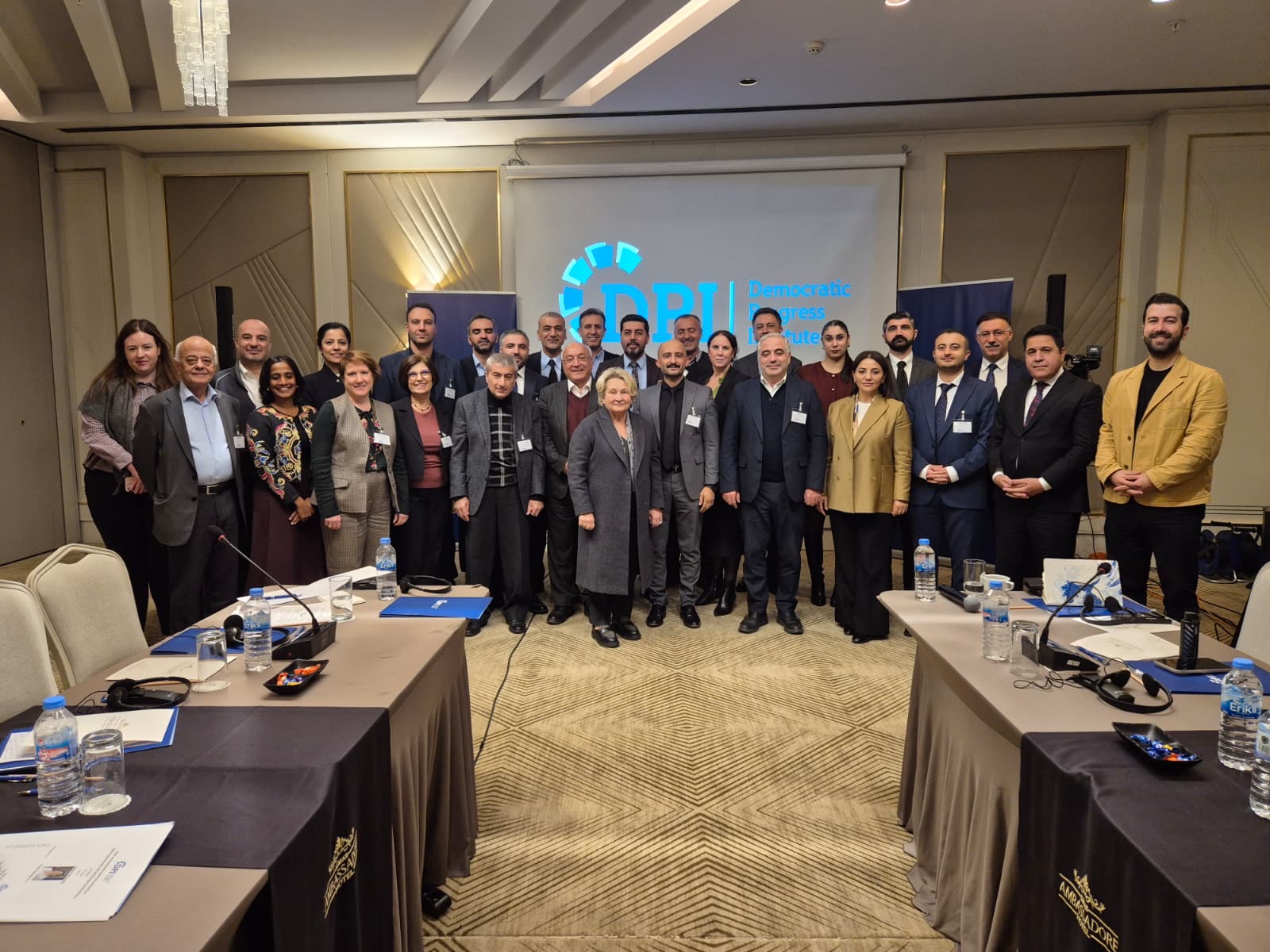
The Democratic Progress Institute (DPI) held the third roundtable in its series on Disarmament, Demobilisation and Integration (DDR) in Ankara on 7 November 2026. The meeting built on previous discussions held in Istanbul and Van prior to the entry into force of Law No. 7595.
Law No. 7595 on Strengthening National Solidarity and Social Integration was adopted on 18 August 2026, and the Ankara roundtable focused on its implementation. It considered the stages and requirements set out in the Law and how these could be aligned with DDR principles and mechanisms.
In the first session, Dr Mimmi Söderberg Kovacs of the Folke Bernadotte Academy in Sweden discussed comparative experiences of political and security transitions, noting that DDR is a process shaped by its wider context and is named and carried out differently from one country to another. It noted that such processes are named and carried out differently from one country to another. Several issues that arise in comparative practice were addressed. These included eligibility criteria, the design and mandate of monitoring and verification mechanisms, and the timing and sequencing of the different stages of a process. The role of transitional justice mechanisms in building public confidence was also considered.
The presentation went on to address integration in its legal, social, economic, psychological and political dimensions. International research on political integration was reviewed, together with the forms of civic and political participation seen in other contexts.
Later sessions addressed DDR principles and mechanisms in the implementation of the Framework Law, and the legislative changes that may accompany it. The stages set out in the Law were then discussed, from the determination by the security institutions and the National Security Council decision, through the six-month notification period, to deferral and integration.
The participants included Members of Parliament, bar association presidents, diplomatic representatives, academics, and legal practitioners.
Laws are essential to building lasting peace, but they need the support of institutions and practices that people can trust. The discussions at the Ankara roundtable will help address these legal and institutional questions carefully and in a timely manner. In doing so, they make a contribution, however modest, to the search for a peaceful, democratic and lasting future for Türkiye. DPI will continue to support inclusive dialogue on these questions by bringing together different perspectives and comparative experience.
DPI would like to express its sincere gratitude to the following funders for their support and continued commitment to our work: the Dutch Ministry of Foreign Affairs, the Irish Department of Foreign Affairs and Trade, the Swiss Federal Department of Foreign Affairs and the Norwegian Ministry of Foreign Affairs.
Their invaluable support enables DPI to continue its work promoting dialogue, peacebuilding, democracy and sustainable peace.